当前位置:网站首页>Gbase 8s index R tree
Gbase 8s index R tree
2022-06-25 04:32:00 【Eight delicacies tofu】
R Trees can be seen as B The extension of tree in high dimensional space , Be similar to B Tree index ,R Tree indexes can also be used to organize data , Accelerate data access . It is designed for tables that contain multidimensional and spatial data types , It solves the problem of searching in high dimensional space . stay GBase 8s This is used in the database R Tree index structure , It is mainly used to create indexes for the following data types :
- Spatial data containing multiple dimensions , Such as (X,Y) Geographic coordinate system ;
- Additional time dimension data ;
- Interval value , For example, time period data (9:00 P.M~9:30 P.M);
- A combination of multiple numeric types , It can also be regarded as multidimensional data value .
In general , The database uses two fields (X,Y) To store the geographical location information of the museum , We need to traverse all the museums , Get its geographic location to calculate the distance , So as to get all the museums that meet the requirements . Without index , You need to traverse all the data rows in the table to calculate . If we create on this high dimensional spatial data R Tree index , Can greatly improve the search performance . Its idea is similar to B Trees , stay B The data in the tree is divided according to the size of the value , Organize the partitioned data into a tree for storage , and R Trees are used to segment spatial data , take B The tree method is effectively extended to high-dimensional space .
R A tree is a multi fork balanced tree that stores high-dimensional data , Multiple rectangular areas are stored in each node , Every area I Corresponds to a pointer . Rectangular area in leaf node I An outer rectangle for a data object , And the pointer points to the area I Actual data row data contained in . Nonleaf node ( Root and branch nodes ) Rectangular area in I The outer rectangle of the rectangular area for all child nodes , And the pointer points to the child node at the next level , So all areas in the child node are in the area I Within the scope of .

In order to achieve R Tree index , We use a minimum bounding rectangle to closely surround the spatial object ,R8 It is such a rectangular area , stay R8 Contains one or more spatial data objects , Divide all the data , All in all 12 The smallest rectangle (R8-R19) To surround all the data , They are stored in R In the leaf node of the tree , Each region has a pointer to the data objects contained in the region . Next, merge these smallest rectangular areas , Store in R In the upper node of the tree . We found that R8、R9 and R10 The three areas are closest , Merge them into a larger rectangular area R3 in , Empathy , This tree R In the tree branch node 5 Regions (R3~R7) Both contain the smallest rectangles in the leaf node , And each region has a pointer to the node of the next layer , Used to record several small rectangles contained in this area . Repeat the iteration process , Until all the data is stored in the largest areas of the root node (R1 and R2) until .
And B Trees are like , A tree R Trees need to satisfy the following properties :
- The root node has at least two child nodes , Unless it is a leaf node ;
- Except for the root node , Every node ( Branch nodes and leaf nodes ) Contained entities ( Rectangular area ) The number is between the minimum number of items m And the maximum number of items M Between , Usually m=M/2;
- All leaf nodes are on the same layer ;
- In a node , There is no order requirement for the arrangement of each entity .
Here, the rectangular region in two-dimensional space can be extended to high-dimensional space .
R Tree search 、 Insert and delete operations are similar to B Trees are like , Therefore, it can be effectively applied to the database .R The spatial regions corresponding to the sibling nodes of the tree can overlap , This makes it easier to insert and delete , But when searching, you may have to find multiple paths to get the final results , Therefore, the size of overlapping area has a great impact on the search efficiency .R+ Trees improve on this , The spatial regions corresponding to sibling nodes do not overlap .
R A tree index is a dynamic index , in other words , When the data table is modified 、 When inserting and deleting ,R Tree indexes maintain their own data accordingly . in addition , Creating R Before tree index , We do not need to know the number or range of data in the index column , You can easily build R Tree index .
边栏推荐
猜你喜欢

【esp32学习之路6——flash加密】

How to draw an industry investment map

UCLA | generative pre training for black box optimization

"How to carry out industrial positioning" in local / Park industrial planning
"Comment positionner l'industrie" dans la planification industrielle locale / parc
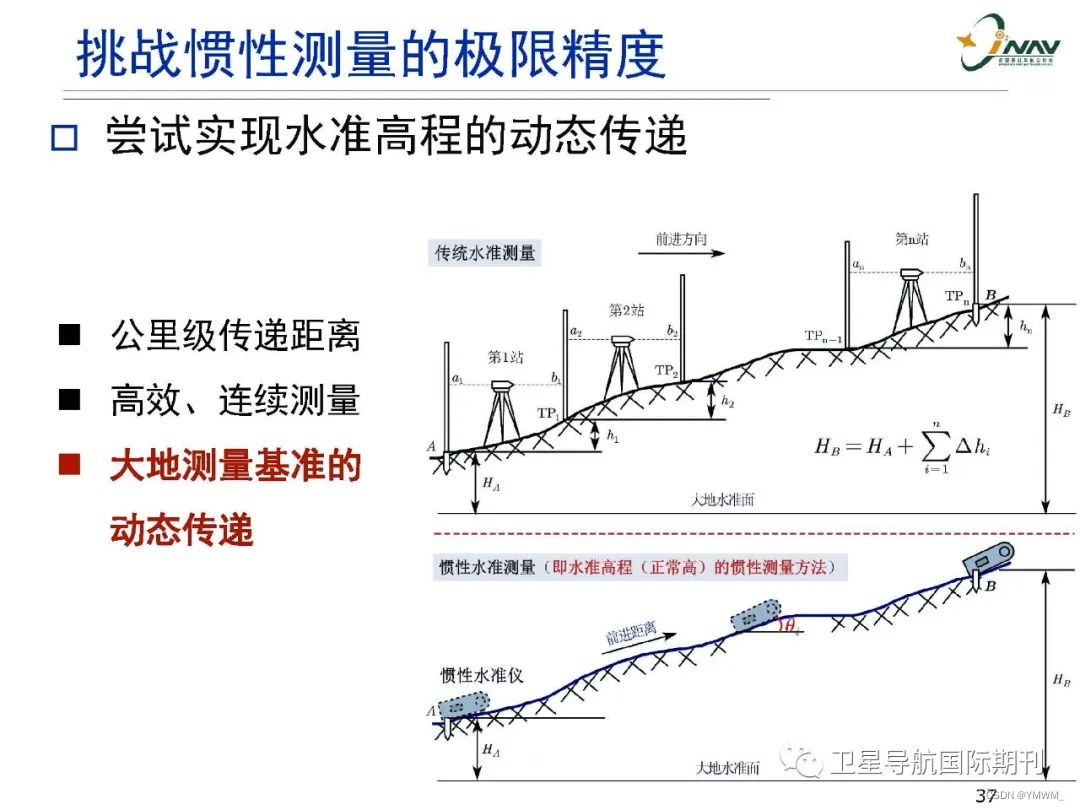
Lecture record: new application of inertial navigation - inertial measurement

mongodb集群

CTF_ Web:8-bit controllable character getshell

Is opencv open source?

Office macro virus bounce shell experiment
随机推荐
CTF_ Variable coverage in web:php
Zoran community
1. Phase II of the project - user registration and login
Uniapp makes mobile app programs, using uni Choosevideo record video, video playback is fuzzy, and the resolution is low
GBASE 8s的数据导入和导出
Summary of various problems encountered by cocos2d-x
[openwrt] we recommend a domestically developed version of openwrt, an introduction to istoreos. It is very easy to use. It is mainly optimized. It solves the problem of Sinicization.
CTF_ Web: Advanced questions of attack and defense world expert zone WP (19-21)
Finereport (sail soft) handling the problem that the histogram data label is blocked
CTF_ Web: advanced problem WP (5-8) of attack and defense world expert zone
mongodb集群
CTF_ Web:8-bit controllable character getshell
Laravel document sorting 11. System architecture
Anaconda installation +tensorflow installation +keras installation +numpy installation (including image and version information compatibility issues)
Flutter Builder & futurebuilder components
Comparison of towe/ JIRA / tapd / Zen collaboration platforms
CTF_ Web: Advanced questions of attack and defense world expert zone WP (15-18)
如何筛选出和产品相关的词,精准排除掉无效词
openmmlab-环境配置
马斯克发布人形机器人,AI对马斯克为什么意义重大?