当前位置:网站首页>FPGA systematic learning notes serialization_ Day10 [sequential logic, competitive adventure, synchronous reset, asynchronous reset]
FPGA systematic learning notes serialization_ Day10 [sequential logic, competitive adventure, synchronous reset, asynchronous reset]
2022-06-24 17:04:00 【FPGA technology Jianghu】
FPGA Systematic study notes serial _Day10 【 Sequential logic 、 Competition and adventure 、 Synchronous reset 、 Asynchronous reset 】 And 【 Counter design 、verilog Grammatical supplement 】
This series is FPGA Systematic learning students' learning notes are sorted out and shared , If you have the intention to study or purchase the development board , You can add communication group to contact group leader .
Serial 《 Three core smart fpga Design and development - The first 10 God 》 【 Sequential logic 、 Competition and adventure 、 Synchronous reset 、 Asynchronous reset 】 And 【 Counter design 、verilog Grammatical supplement 】
Original author : Zifeng River Please contact the group owner for authorization , Otherwise, we will be held responsible
This article introduces the design of temporal logic , To design a counter to explain sequential logic , At the same time expand verilog Grammatical knowledge .
One 、 Sequential logic
Temporal logic is Verilog HDL Another important application in design . From the characteristics of the circuit , Its characteristic is that the output at any time not only depends on the input at that time , It's also related to the original state of the circuit .
In terms of circuit behavior , No matter how the input changes , Only if the edge of the clock ( A rising or falling edge ) On arrival , It's possible to change the output .
1、 In the description of sequential circuits always In the block reg All type signals are synthesized into registers , This is different from combinational logic circuits .
2、 Nonblocking assignment is recommended in temporal logic “<=”.
3、 The sensitive signal list of sequential logic only needs to add the trigger edge of the clock , All other input and condition judgment signals need not be added , This is because the timing logic is controlled by the jump edge of the clock signal .
Two 、 Temporal logic in FPGA in RTL Realization
Let's write a simple register , have a look fpga How to realize temporal logic
module  counter(
    input           a,
    input               clk,

    output  reg     q
);

    [email protected](posedge clk)begin
        q <= a;
    end

endmodule
Let's see fpga Chip planner for
From the chip Planner , You can see a few details .
1、 We used a look-up table 、 A register . Yes FPGA Come on , This register is there even if you don't use it
2、 Our output signal is related to clk synchronous , Must wait until clk The rising edge of , The output will be updated , So the function of register is realized
3、 ... and 、 Synchronous reset 、 Asynchronous reset
1、 Synchronous reset : In fact, your operation is synchronized with the rising edge of the clock
for instance , You will q Set to 0, The following code is synchronous reset ,q <= 0, It is executed when the rising edge of the clock arrives , So it's a synchronous reset
module  counter(
    input           a,
    input               clk,

    output  reg     q
);

    [email protected](posedge clk)begin
        q <= 0;
    end

endmodule
2、 Asynchronous reset : In fact, your operation has nothing to do with the clock
for instance , You will q Set to 0, The following code is asynchronous reset ,q <= 0, Whatever the state of the clock , Only rst_n Clear when you come
module  counter(
    input                   a,
    input                       clk,
    input                       rst_n,
    output  reg [7:0]   q
);

    [email protected](posedge clk,negedge rst_n)begin
        if(!rst_n)
            q <= 0;
        else
            q <= q + 1'b1;
    end
endmodule
Four 、 Competition and adventure
Competition and adventure : intend , When I sample on the rising edge of my clock , The input signal is unstable , This will bring metastable problems to the circuit
To solve the problem of competition and risk , We only need to meet the signal set-up time and hold time
5、 ... and 、verilog Grammatical supplement
1、parameter Define global variables
parameter T = 26'd49_000_000;
2、defparam Redefine parameters , This is mainly to modify the internal parameters of the instantiated module in the simulation script
defparam counter_inst.T = 26'd49;

counter counter_inst(
.clk        (clk),
.rst_n  (rst_n),
.flag       (flag)
6、 ... and 、 Counter design
To design a 1 Second counter , When the time is one second, give a flag The signal
1、 Code implementation verilog.v
module  counter(
    input               clk,
    input               rst_n,
    output  reg     flag
);

    reg [25:0] count;

    parameter   T =     26'd49_000_000;

    [email protected](posedge clk,negedge rst_n)begin
        if(!rst_n)begin
            flag <= 1'b0;
            count <= 0;
            end
        else    if(count == T)begin
                flag <= 1'b1;
                count <= 0;
            end
        else
            begin
                count <= count + 1'b1;
                flag <= 1'b0;
            end
    end

endmodule
2、 Simulation script
I changed the time parameter to T Change it to T=26‘d49; Convenient simulation
`timescale 1ns/1ps


module counter_tb;

    reg             clk;
    reg             rst_n;
    wire                flag;

    defparam counter_inst.T = 26'd49;

    counter counter_inst(
    .clk        (clk),
    .rst_n  (rst_n),
    .flag       (flag)
);

    always #10 clk = ~clk;

    initial begin
        clk = 0;
        rst_n = 0;
        #20;
        rst_n = 1;
        #5000000;
        $stop;
    end

endmodule
3、 Simulation results
3.1、 You can see the pulse flag It only lasted one cycle
3.2、 It can be seen that the trigger of the pulse is 50 A count
7、 ... and 、 The adder problem hidden in the counter
The counter we designed , It actually uses an adder , Adders are combinational logic ( Because combinatorial logic only depends on input )
When we give the adder an initial value 0 When , The output of the adder immediately outputs 1, That's when it comes to simulation , After starting to reset and pull up ,count At the first clk The rising edge is 1 Why
边栏推荐
- What is the difference between optical fiber jumper and copper wire
- FPGA project development: experience sharing of lmk04821 chip project development based on jesd204b (I)
- Introduction to website development for zero foundation Xiaobai
- Page scrolling effect library, a little skinny
- ## Kubernetes集群中流量暴露的几种方案 Kubernetes集群中流量暴露的几种方案
- Zblog determines whether a plug-in installs the enabled built-in function code
- A set of very good H3C and Tianrongxin Internet cutover scheme templates, with word document download
- A survey of training on graphs: taxonomy, methods, and Applications
- Tencent cloud database mysql:sql flow restriction
- Building a cross public chain platform to solve DAPP development problems
猜你喜欢

A survey on dynamic neural networks for natural language processing, University of California
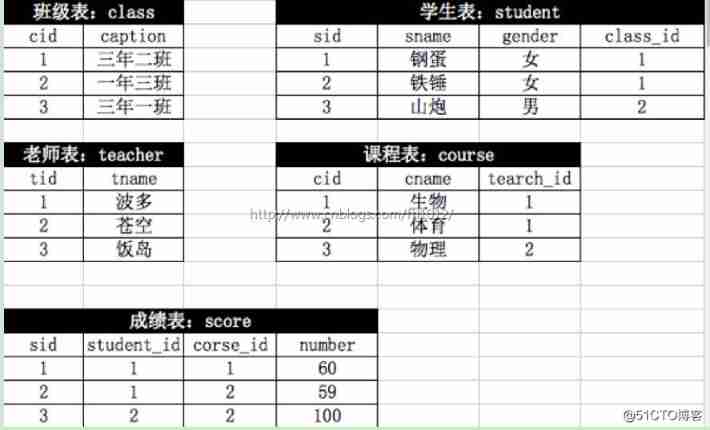
MySQL learning -- table structure of SQL test questions

A survey of training on graphs: taxonomy, methods, and Applications
![[leetcode108] convert an ordered array into a binary search tree (medium order traversal)](/img/e1/0fac59a531040d74fd7531e2840eb5.jpg)
[leetcode108] convert an ordered array into a binary search tree (medium order traversal)

Daily algorithm & interview questions, 28 days of special training in large factories - the 15th day (string)

A survey on model compression for natural language processing (NLP model compression overview)
随机推荐
To redefine the storage architecture, Huawei has used more than five "cores"
Edit distance (linear dp+ violence matching)
Regular expression learning artifact!
Complete the log service CLS questionnaire in 1 minute and receive the Tencent cloud 30 yuan threshold free voucher ~
One article combs multi task learning (mmoe/ple/dupn/essm, etc.)
The RTSP video structured intelligent analysis platform easynvr stops calling the PTZ interface through the onvif protocol to troubleshoot the pending status
问题有多大,中台就有多大
集体突破之后,中国公有云的下一步落在哪里?
AI video structured intelligent security platform easycvr intelligent security monitoring scheme for protecting community residents
If only 2 people are recruited, can the enterprise do a good job in content risk control?
Solution to the problem that qlineedit setting qdoublevalidator setting range is invalid
Zblog system realizes the tutorial of the number of articles published on the same day when the foreground calls
The problem is as big as the middle stage
Video intelligent analysis platform easycvr derivative video management platform menu bar small screen adaptive optimization
Can you remember the code of a programming boss? Can you hit it out without Baidu?
What is the difference between optical fiber jumper and copper wire
A survey on model compression for natural language processing (NLP model compression overview)
06. Tencent cloud IOT device side learning - Introduction to basic functions
Cloud native monitoring via blackbox_ Exporter monitoring website
Tencent cloud database mysql:sql flow restriction