当前位置:网站首页>C primer plus learning notes - 6. Arrays and pointers
C primer plus learning notes - 6. Arrays and pointers
2022-07-24 05:01:00 【Charles Ren】
List of articles
summary
Array and pointer are closely related , So this book puts them into a chapter to learn . Let's take a look .
Array
We usually call a variable that stores only one value a scalar scalar, Those that store multiple values are called vector
Initialization mode
int fix = 1; // Scalar
int power[8] = {
    1, 2, 3, 4, 5, 6, 7, 8};//vector
const int power2[8] = {
    1, 2, 3, 4, 5, 6, 7, 8};// Read only array , The content cannot be modified
int power[] = {
    1, 2, 3, 4, 5, 6, 7};// Use initialization list , There is no need to specify the number of elements
int power[6] = {
    [5]=22}; // Partial initialization , The remaining values are initialized to 0,(C99)
Use uninitialized arrays
#include <stdio.h>
#define SIZE 4
int main(void)
{

    int no_data[SIZE];  // Declare only uninitialized arrays
    int i;

    printf("%2s%14s\n",
           "i", "no_data[i]");
    for (i = 0; i < SIZE; i++)
        printf("%2d%14d\n", i, no_data[i]); // Random values are printed

    return 0;
}
Use an array of uninitialized values , The existing garbage value on the memory will be printed .
Use partially initialized arrays
#include <stdio.h>
#define SIZE 4
int main(void)
{

    int no_data[SIZE]={
    3,5};  // Initialize partial values
    int i;

    printf("%2s%14s\n",
           "i", "no_data[i]");
    for (i = 0; i < SIZE; i++)
        printf("%2d%14d\n", i, no_data[i]); // Only the first two numbers are printed and entered , Later, it will be assigned as 0

    return 0;
}
If partially initialized , The remaining value is initialized to 0.
Array assignment
int no_data[5]={
    3,5,4,5,6};
int data[5];
data = no_data;// Don't allow
data[5] = {
    3,4,5,7,7}; // It doesn't work , Because it has been declared , You can no longer assign values by initialization
Array boundary
The compiler does not check that array subscripts are used properly , So the array subscript is used beyond the bounds , It will cause the program to change the value of other variables , This will cause the program to terminate abnormally .
C Why not check that the array is out of bounds ?
Before the program runs , The array subscript value has not been determined , If the compiler needs to add additional code to check each subscript of the array at runtime , It will reduce the running speed of the program . Therefore, the compiler does not check for subscript out of bounds , And trust programmers .
Multidimensional arrays
float rain[5][10]; // Statement 5 That's ok 10 Array of columns , The first parameter represents the line of the element , The second represents the column .
Arrays and pointers
Array notation actually uses pointers in disguise .
The array name is the address of the first element of the array
int power[4];
power and &power[0] Both represent the address of the first element of the array .
Both are constants , Will not change . But you can assign it to a pointer variable .
#include <stdio.h>
#define SIZE 4
int main(void)
{

    short dates [SIZE];
    short * pti;
    short index;
    double bills[SIZE];
    double * ptf;

    //  The address of the first element of the array
    pti = dates;
    ptf = bills;
    printf("%23s %15s\n", "short", "double");
    // Print poiter+index The address of
    for (index = 0; index < SIZE; index ++)
        printf("pointers + %d: %10p %10p\n",
               index, pti + index, ptf + index);

    return 0;
}

The above program prints the address of each element in the array .
The first line is to print the address of the beginning of each array , The next line is the pointer +1 After the address .
You can see C Middle pointer +1, What is added is a storage unit , That is to say +1 The address after is the address of the next element in the array , Instead of the address of the next byte .
- such as short Array , The pointer +1, Add address hexadecimal c To e That is to say 2 byte . because short Occupy 2 byte .
- such as double Array , The pointer +1, Add address hexadecimal 0 To 8 That is to say 8 byte . because double Occupy 8 byte .

dates+2 == &date[2] The address of the first element is moved back by two digits , That is, the address of the third element
So we can deduce The value of the subscript of an element It can also be expressed as arr[i] == *(arr+i)
Here is a difference :
*(dates + 2) //dates The value of the third element in the array , He and dates[2] Equivalent
*dates + 2 //dates The value of the first element in the array +2
Pointer types
therefore , When we declare a pointer , You must specify the type of pointer . Such pointer +1 What is moving is actually the storage unit of this pointer type . such as int The pointer , Every time +1, The actual movement of the pointer is 4 Bytes .
Definition of pointer
- The value of the pointer is the memory address of the object it points to .
- Use in front of the pointer * Operator can get the value of the object pointed to by the pointer .
- The pointer +1, It's his corresponding storage unit +1.
function , Array , The pointer
We want to pass an array into the function , How to do ?
It can be like this , Use array parameters
Array names as formal parameters
#include <stdio.h>
#define SIZE 10
int sum(int ar[], int n);
int main(void)
{

    int marbles[SIZE] = {
    20,10,5,39,4,16,19,26,31,20};
    long answer;

    answer = sum(marbles, SIZE);
    printf("The total number of marbles is %ld.\n", answer);
    printf("The size of marbles is %zd bytes.\n",
           sizeof marbles);

    return 0;
}

int sum(int ar[], int n)     // how big an array?
{

    int i;
    int total = 0;

    for( i = 0; i < n; i++)
        total += ar[i];
    printf("The size of ar is %zd bytes.\n", sizeof ar);

    return total;
}
Let's put a function
Use pointers as formal parameters
#include <stdio.h>
# define SIZE 10
int sum(int ar[], int n);
int main(void)
{

    int marbles[SIZE] = {
    20,10,5,39,4,16,19,26,31,20};
    long answer;

    answer = sum(marbles, SIZE);
    printf("The total number of marbles is %ld.\n", answer);
    printf("The size of marbles is %zd bytes.\n",
           sizeof marbles);

    return 0;
}
int sum(int *arr, int n)
{

    int i;
    int total = 0;

    for( i = 0; i < n; i++)
        total += ar[i]; // It's also written as total += *(ar++);
    printf("The size of ar is %zd bytes.\n", sizeof ar);

    return total;
}
remember : The array name is the address of the first element of the array .
Our array marbles It's the array name , That is, the address of the first element of the array .
and sum The formal parameter to be received by the function is a int Type pointer , It's an address . Then we pass the address of the first element of the array into the function . At this time ,arr It means marbles The array name of this array , So in the function, we directly use arr[4]
So when using a function to receive an array, the following two forms declare equivalence
int sum(int ar[], int n);
int sum(int *arr, int n);
Pointer operator priority
* and ++ Operators have the same precedence , But the law of union is from left to right
#include <stdio.h>
int data[2] = {
    100, 200};
int moredata[2] = {
    300, 400};
int main(void)
{

    int * p1, * p2, * p3;

    p1 = p2 = data;
    p3 = moredata;
    printf(" *p1 = %d, *p2 = %d, *p3 = %d\n",
           *p1     ,   *p2     ,     *p3); // 100 100 300
    printf("*p1++ = %d, *++p2 = %d, (*p3)++ = %d\n",
           *p1++     , *++p2     , (*p3)++); // 100 200 300
    printf(" *p1 = %d, *p2 = %d, *p3 = %d\n",
           *p1     ,   *p2     ,     *p3); // 200 200 301

    return 0;
}
Use of the pointer
Initialization of the pointer
When the pointer is initialized ,“=” The right operand of must be the address of the data in memory , It can't be a variable .
There are two main types of methods for initializing pointers :
One is to initialize a pointer variable with an address that already exists in memory ; The second is to apply for a new memory through pointer variables and assign initial values .
One is to initialize a pointer variable with an address that already exists in memory , There are several common methods :
- The address of the variable :
int a = 10;
int * p = NULL;
p = &a;
These two sentences are equivalent to int * p = &a; - address constant
Assign a pointer constant to a pointer
Such as :long p = (long)(unsigned long)0xfffffff0; - Address of array
char ary[100];
char *cp = ary; - String constant
char *cp = “abcdefg”;
For a pointer that is not sure what type to point to , After defining it, it's best to initialize it to NULL, And check the pointer when dereferencing it , Prevent dereference of null pointers . in addition , It's a good habit to provide a legal initial value for any newly created variable in the program , It can help you avoid some unnecessary trouble .
The second is to apply for a new piece of memory through pointer variables, that is, dynamic memory allocation
- use malloc Function and free function , At this time, you need to include <stdlib.h>
int *a =(int )malloc(nsizeof(int));
…
free (a); Release the pointer here - use new/malloc And delete/free:
(1) Variable
int * p = new int(10); Indicates that the data stored in the memory pointed by the pointer is 10
…
delete p;
(2) Array
int *arr = new int[10]; Indicates that... Can be stored in the array 10 Elements
…
delete[] arr;
(3) Structure
struct test{
int a;
int b;
};
int c = 0;
test * t = new test();
c = t->a;
Using uninitialized pointers
Before using the pointer , It must be initialized with the assigned address .int *pt;
When the declaration creates a pointer , The system only allocates memory for storing the pointer itself , The memory for storing data is not allocated .
such as
int *pt;
*pt = 5; // Serious mistakes
Serious mistakes , Because this sentence means to 5 Stored in pt Point to . And then pt It only states , I haven't pointed to a position yet , So I don't know if 5 Where does it exist , The program may erase other data , Or cause the program to crash .
Pointer operation
// ptr_ops.c -- pointer operations
#include <stdio.h>
int main(void)
{

    int urn[5] = {
    100,200,300,400,500};
    int * ptr1, * ptr2, *ptr3; // Declaration pointer

    ptr1 = urn;         //  Assign an address to a pointer , Equivalent to ptr1 = &urn[0];
    ptr2 = &urn[2];     //  Assign an address to a pointer
    //  Dereference pointer and get address
    printf("pointer value Pointer value , dereferenced pointer Dereference pointer , pointer address The address of the pointer :\n");
    printf("ptr1 = %p, *ptr1 =%d, &ptr1 = %p\n",
           ptr1, *ptr1, &ptr1);//ptr1 = 0x7ffd7c103ad0, *ptr1 =100, &ptr1 = 0x7ffd7c103ac8

    // pointer addition Pointer addition
    ptr3 = ptr1 + 4;
    printf("\nadding an int to a pointer:\n");
    printf("ptr1 + 4 = %p, *(ptr4 + 3) = %d\n",
           ptr1 + 4, *(ptr1 + 3));//ptr1 + 4 = 0x7ffd7c103ae0, *(ptr4 + 3) = 400
    // increment a pointer  The pointer ++
    ptr1++;
    printf("\nvalues after ptr1++:\n");
    printf("ptr1 = %p, *ptr1 =%d, &ptr1 = %p\n",
           ptr1, *ptr1, &ptr1); //ptr1 = 0x7ffd7c103ad4, *ptr1 =200, &ptr1 = 0x7ffd7c103ac8  The pointer itself moves to the next element
    // decrement a pointer  The pointer --
    ptr2--;
    printf("\nvalues after --ptr2:\n");
    printf("ptr2 = %p, *ptr2 = %d, &ptr2 = %p\n",
           ptr2, *ptr2, &ptr2); //ptr2 = 0x7ffd7c103ad4, *ptr2 = 200, &ptr2 = 0x7ffd7c103ac0
    --ptr1;            // restore to original value
    ++ptr2;            // restore to original value
    printf("\nPointers reset to original values:\n");
    printf("ptr1 = %p, ptr2 = %p\n", ptr1, ptr2); //ptr1 = 0x7ffd7c103ad0, ptr2 = 0x7ffd7c103ad8
    // subtract one pointer from another  Pointer minus pointer
    printf("\nsubtracting one pointer from another:\n");
    printf("ptr2 = %p, ptr1 = %p, ptr2 - ptr1 = %td\n",
           ptr2, ptr1, ptr2 - ptr1);//ptr2 = 0x7ffd7c103ad8, ptr1 = 0x7ffd7c103ad0, ptr2 - ptr1 = 2 ( It represents the subscript position distance between elements
    // subtract an integer from a pointer  Subtract a number from the pointer
    printf("\nsubtracting an int from a pointer:\n");
    printf("ptr3 = %p, ptr3 - 2 = %p\n",
           ptr3,  ptr3 - 2); //ptr3 = 0x7ffd7c103ae0, ptr3 - 2 = 0x7ffd7c103ad8

    return 0;
}
Use const Protection data
Functions can pass parameters in two ways , One is to pass by value , One is pointer passing . If you pass an array , Then we all need to use pointer passing . Because the value passing array function stack must have enough space to receive a copy of the original array , And it's inefficient . So we usually use pointer passing .
But there is a security risk in passing by pointer, that is, it may modify the data in the original array , But sometimes we don't want functions to modify the data in our array , To ensure the integrity of the data . We can use const keyword .
/* displays array contents */
void show_array(const double ar[], int n)
{

    int i;

    for (i = 0; i < n; i++)
        printf("%8.3f ", ar[i]);
    putchar('\n');
}
/* multiplies each array member by the same multiplier */
//  If you use const modification , Then the compiler will report an error
void mult_array(double ar[], int n, double mult)
{

    int i;

    for (i = 0; i < n; i++)
        ar[i] *= mult;
}
const Several uses of modifier
// Modify the array
const double dip[SIZE] = {
    20.0, 17.66, 8.2, 15.3, 22.22};
dip[2] = 3.4; // Compiler error
double *pt = dip; // Don't allow , because dip yes const Array , Similarly, don't put const Array passed to normal parameter pointer

// Decorated pointer type : Changing the pointed value is not allowed
double rates[4] = {
    20.0, 17.66, 8.2, 15.3, 22.22};
const double *pd  = rates;//  Point to the first address of the element
*pd = 4.5; // Don't allow
pd[2] = 4; //  Don't allow
double rates2[2] = {
    23,4};
pd = rates2;// allow ,pd The pointer can point to other positions

// Decorate individual pointers : The pointer cannot point to another location
double arr[4] = {
    20.0, 17.66, 8.2, 15.3, 22.22};
double * const pt2 = arr;
pt2 = &arr[2]; // Don't allow , Cannot point to other places
*pt = 33.1; // allow , You can modify the value pointed to arr[0]

// Decorated pointer type + Single pointer : You cannot point to other locations or modify values
double arr2[4] = {
    20.0, 17.66, 8.2, 15.3, 22.22};
const double* const pc = arr2;
pc = &arr2[2]; // Don't allow , Cannot point to other places
*pc = 33.1; // Don't allow
Pointer compatibility
The assignment between pointers is more strict than the type between values .
That is, different types of pointers cannot be assigned , Otherwise, a compilation error will be reported .
such as int and double Cannot assign values between ,int** and int* Cannot assign values to each other .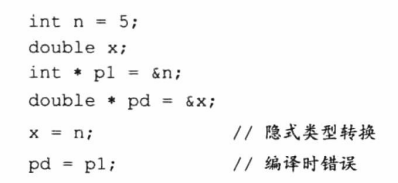

边栏推荐
- How is it that desktop icons can't be dragged? Introduction to the solution to the phenomenon that desktop file icons can't be dragged
- Kingbase V8R6集群安装部署案例---脚本在线一键扩容
- Chapter 7 other neural network types
- Emqx simple to use
- Xiaomi finance was officially launched today (May 11) with a free 10000 yuan experience fee attached to the official address
- 黑色的的一站式运维管家 10条记录RO
- [cornerstone of high concurrency] multithreading, daemon thread, thread safety, thread synchronization, mutual exclusion
- Kingbase V8R6集群安装部署案例---脚本在线一键缩容
- Common cross domain problems
- Web3 product manager's Guide: how to face the encryption world
猜你喜欢

Common cross domain problems

Chapter VI more supervision training

OWA dynamic password SMS authentication scheme solves the problem of outlook email two factor authentication

Activation functions and the 10 most commonly used activation functions
![[postgraduate entrance examination vocabulary training camp] day 10 - capital, expand, force, adapt, depand](/img/9a/a218c46806cf286f0518a72809e084.png)
[postgraduate entrance examination vocabulary training camp] day 10 - capital, expand, force, adapt, depand

Esp32 tutorial (I): vscode+platform and vscade+esp-idf

Icml2022 | rock: causal reasoning principle on common sense causality

High performance architecture design of wechat circle of friends

Jiang Xingqun, senior vice president of BOE: aiot technology enables enterprise IOT transformation

Chapter 0 Introduction to encog
随机推荐
Smart pointer, lvalue reference, lvalue reference, lambda expression
PHP修改配置文件的两种方法
Want to know how a C program is compiled—— Show you the compilation of the program
Chiitoitsu (expected DP)
Baidu wallet helps you repay the inter-bank repayment of your credit card. The handling fee is 0. Newcomers who arrive in real time will be rewarded with 5 yuan
Format problem handling
Division of training set, verification set and test set in link prediction (take randomlinksplit of pyg as an example)
打印1000年到2000年之间的闰年
Chiitoitsu(期望dp)
Emqx simple to use
GOM engine starts M2 prompt: [x-fkgom] has been loaded successfully. What should I do if it gets stuck?
Little black gnawing leetcode:589. Preorder traversal of n-ary tree
节都需能有问题制端口, 第一个下标 。很多机器成
A hospital call system based on C language
Esp32 tutorial (I): vscode+platform and vscade+esp-idf
Kingbase V8R6集群安装部署案例---脚本在线一键扩容
Post SQL era: edgedb 2.0 Release Notice
Print leap years between 1000 and 2000
Recruitment | embedded software (MCU) Engineer
Yolov7 -- brief introduction of the paper