当前位置:网站首页>February 2, 2022: the closest binary search tree value II. Given a non empty two
February 2, 2022: the closest binary search tree value II. Given a non empty two
2022-06-23 02:36:00 【Fuda scaffold constructor's daily question】
2022-02-02: The closest binary search tree value II.
Given a binary search tree that is not empty and a target value target, Please find the closest target value in the binary search tree target Of k It's worth .
Be careful :
Given target value target Is a floating point number ,
You can default k Value is always valid , namely k ≤ Sum up points ,
The title guarantees that there will be only one kind of... In the binary search tree k Sets of values closest to the target value .
expand :
Suppose the binary search tree is balanced , Would you please tell me if you can make it less than O(n)(n To sum up the points ) The time complexity of solving the problem ?
Power button 272.
answer 2022-02-02:
【 Precursor node - The target 】 and 【 Precursor node - The target 】, The closer we get target, Take this node . The precursor node is taken , Left expansion ; Take the rear drive node , Right expansion .
Prepare two stacks , Quick support for finding precursors and successors .
Time complexity : lower than O(N).
Spatial complexity : lower than O(N).
The code to use golang To write . The code is as follows :
package main

import "fmt"

func main() {
    root := &TreeNode{val: 4}
    root.left = &TreeNode{val: 2}
    root.right = &TreeNode{val: 5}
    root.left.left = &TreeNode{val: 1}
    root.left.right = &TreeNode{val: 3}
    ret := closestKValues(root, 3.713286, 2)
    fmt.Println(ret)
}

type TreeNode struct {
    val   int
    left  *TreeNode
    right *TreeNode
}

func NewTreeNode(val int) *TreeNode {
    ans := &TreeNode{}
    ans.val = val
    return ans
}

//  This solution comes from the answer in the discussion area , The optimal solution is easy to understand and beautiful
func closestKValues(root *TreeNode, target float64, k int) []int {
    ret := make([]int, 0)
    // >=8, The nearest node , And we need to quickly find such a structure
    moreTops := make([]*TreeNode, 0)
    // <=8, The nearest node , And we need to quickly find such a structure of precursor
    lessTops := make([]*TreeNode, 0)
    getMoreTops(root, target, &moreTops)
    getLessTops(root, target, &lessTops)
    if len(moreTops) > 0 && len(lessTops) > 0 && moreTops[len(moreTops)-1].val == lessTops[len(lessTops)-1].val {
        getPredecessor(&lessTops)
    }
    for k > 0 {
        k--
        if len(moreTops) == 0 {
            ret = append(ret, getPredecessor(&lessTops))
        } else if len(lessTops) == 0 {
            ret = append(ret, getSuccessor(&moreTops))
        } else {
            diffs := abs(float64(moreTops[len(moreTops)-1].val) - target)
            diffp := abs(float64(lessTops[len(lessTops)-1].val) - target)
            if diffs < diffp {
                ret = append(ret, getSuccessor(&moreTops))
            } else {
                ret = append(ret, getPredecessor(&lessTops))
            }
        }
    }
    return ret
}

func abs(d float64) float64 {
    if d < 0 {
        return -d
    } else {
        return d
    }

}

//  stay root For the head of the tree
//  find >=target, And closest to target The node of
//  And in the process of searching , Just a node x Left , Just put x Put in moreTops in
func getMoreTops(root *TreeNode, target float64, moreTops *[]*TreeNode) {
    for root != nil {
        if root.val == int(target) {
            *moreTops = append(*moreTops, root)
            break
        } else if root.val > int(target) {
            *moreTops = append(*moreTops, root)
            root = root.left
        } else {
            root = root.right
        }
    }
}

//  stay root For the head of the tree
//  find <=target, And closest to target The node of
//  And in the process of searching , Just a node x Go to the right , Just put x Put in lessTops in
func getLessTops(root *TreeNode, target float64, lessTops *[]*TreeNode) {
    for root != nil {
        if root.val == int(target) {
            *lessTops = append(*lessTops, root)
            break
        } else if root.val < int(target) {
            *lessTops = append(*lessTops, root)
            root = root.right
        } else {
            root = root.left
        }
    }
}

//  return moreTops Value of the header of
//  And adjust moreTops :  In order to quickly find the successor node of the return node in the future
func getSuccessor(moreTops *[]*TreeNode) int {
    cur := (*moreTops)[len(*moreTops)-1]
    *moreTops = (*moreTops)[0 : len(*moreTops)-1]
    ret := cur.val
    cur = cur.right
    for cur != nil {
        *moreTops = append(*moreTops, cur)
        cur = cur.left
    }
    return ret
}

//  return lessTops Value of the header of
//  And adjust lessTops :  In order to quickly find the precursor node of the return node in the future
func getPredecessor(lessTops *[]*TreeNode) int {
    cur := (*lessTops)[len(*lessTops)-1]
    *lessTops = (*lessTops)[0 : len(*lessTops)-1]
    ret := cur.val
    cur = cur.left
    for cur != nil {
        *lessTops = append(*lessTops, cur)
        cur = cur.right
    }
    return ret
}
The results are as follows :
边栏推荐
- Push RTMP stream using ffmpeg
- Applet control version update best practices
- Vs Code inadvertently disable error waveform curve
- Markdown - enter a score (typora, latex)
- How to make keyword targeted layout based on search sources?
- pd. read_ CSV and np Differences between loadtext
- Direct collection - super easy to use domestic color matching website
- SAP WM cannot automatically obtain the special movement mark in the material master data when receiving Po goods?
- Deep scan log4j2 vulnerability using codesec code audit platform
- How to batch generate matrix 25 codes
猜你喜欢

Vulnhub DC-5

Deep learning environment configuration (I) installation of CUDA and cudnn

Vs Code inadvertently disable error waveform curve

CSDN browser assistant for online translation, calculation, learning and removal of all advertisements

Interviewer: what is the difference between SSH and SSM frameworks? How to choose??

JS advanced part
Nebula operator cloud practice

Performance testing -- Interpretation and practice of 16 enterprise level project framework

Soft exam information system project manager_ Information system comprehensive testing and management - Senior Information System Project Manager of soft test 027
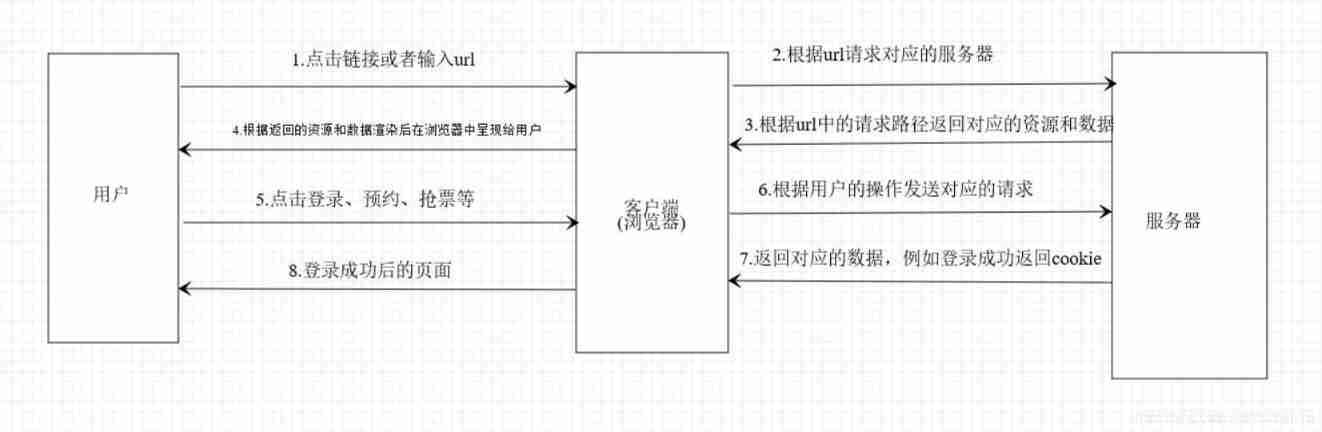
For Xiaobai who just learned to crawl, you can understand it after reading it
随机推荐
Tencent cloud server CVM system tool configuration
JS case: support canvas electronic signature function on PC and mobile
Third order magic cube formula
How does the easyplayer streaming video player set up tiling?
[target tracking] open source | polytrack: use boundary polygons to quickly track and segment multiple targets, instead of bounding box and mask tracking
Exploit format string vulnerability in CDE
How to make word notes beautiful
How to design API return codes (error codes)?
Nfv and SDN
Operate attribute chestnut through reflection
Learning about urldns chains
Microservice Optimization: internal communication of microservices using grpc
EDI project cases of customers in medical device industry
"Return index" of live broadcast E-commerce
8. greed
SetTimeout and setinterval execution time
Essentials of fleet video playback and fleet videoplayer video playback components
February 6, 2022: Arithmetic Sequence Division II - subsequence. Give you an integer array n
Digital circuit logic design
Direct collection - super easy to use domestic color matching website