当前位置:网站首页>Erc-721 Standard Specification
Erc-721 Standard Specification
2022-06-24 17:21:00 【Al1ex】
The preface of the article
ERC-721 The official explanation is "Non-Fungible Tokens", The English abbreviation is "NFT", Can be translated as non interchangeable Tokens, Simply put, every Token Are unique and not interchangeable .
Unique features
Cannot divide :ERC-20 Token It can be infinitely subdivided into 10^18 Share , and ERC721 Of Token The smallest unit is 1, No more segmentation
unique : every last Token Completely different , And each Token It has different values for different users
Interface list
Let's look at it first IERC-721.sol Stipulated in ERC-721 List of interfaces to be implemented :
#FUNCTIONS
totalSupply()
tokenOfOwnerByIndex(owner, index)
tokenByIndex(index)
balanceOf(owner)
ownerOf(tokenId)
safeTransferFrom(from, to, tokenId)
transferFrom(from, to, tokenId)
approve(to, tokenId)
getApproved(tokenId)
setApprovalForAll(operator, _approved)
isApprovedForAll(owner, operator)
safeTransferFrom(from, to, tokenId, data)
supportsInterface(interfaceId)

#EVENTS
Transfer(from, to, tokenId)
Approval(owner, approved, tokenId)
ApprovalForAll(owner, operator, approved)
Number of interface parameters 、 Parameter type 、 return type 、 The number of return values is defined as follows :
// SPDX-License-Identifier: MIT

pragma solidity ^0.8.0;

import "../../utils/introspection/IERC165.sol";

/**
 * @dev Required interface of an ERC721 compliant contract.
 */
interface IERC721 is IERC165 {
    /**
     * @dev Emitted when `tokenId` token is transferred from `from` to `to`.
     */
    event Transfer(address indexed from, address indexed to, uint256 indexed tokenId);

    /**
     * @dev Emitted when `owner` enables `approved` to manage the `tokenId` token.
     */
    event Approval(address indexed owner, address indexed approved, uint256 indexed tokenId);

    /**
     * @dev Emitted when `owner` enables or disables (`approved`) `operator` to manage all of its assets.
     */
    event ApprovalForAll(address indexed owner, address indexed operator, bool approved);

    /**
     * @dev Returns the number of tokens in ``owner``'s account.
     */
    function balanceOf(address owner) external view returns (uint256 balance);

    /**
     * @dev Returns the owner of the `tokenId` token.
     *
     * Requirements:
     *
     * - `tokenId` must exist.
     */
    function ownerOf(uint256 tokenId) external view returns (address owner);

    /**
     * @dev Safely transfers `tokenId` token from `from` to `to`, checking first that contract recipients
     * are aware of the ERC721 protocol to prevent tokens from being forever locked.
     *
     * Requirements:
     *
     * - `from` cannot be the zero address.
     * - `to` cannot be the zero address.
     * - `tokenId` token must exist and be owned by `from`.
     * - If the caller is not `from`, it must be have been allowed to move this token by either {approve} or {setApprovalForAll}.
     * - If `to` refers to a smart contract, it must implement {IERC721Receiver-onERC721Received}, which is called upon a safe transfer.
     *
     * Emits a {Transfer} event.
     */
    function safeTransferFrom(address from, address to, uint256 tokenId) external;

    /**
     * @dev Transfers `tokenId` token from `from` to `to`.
     *
     * WARNING: Usage of this method is discouraged, use {safeTransferFrom} whenever possible.
     *
     * Requirements:
     *
     * - `from` cannot be the zero address.
     * - `to` cannot be the zero address.
     * - `tokenId` token must be owned by `from`.
     * - If the caller is not `from`, it must be approved to move this token by either {approve} or {setApprovalForAll}.
     *
     * Emits a {Transfer} event.
     */
    function transferFrom(address from, address to, uint256 tokenId) external;

    /**
     * @dev Gives permission to `to` to transfer `tokenId` token to another account.
     * The approval is cleared when the token is transferred.
     *
     * Only a single account can be approved at a time, so approving the zero address clears previous approvals.
     *
     * Requirements:
     *
     * - The caller must own the token or be an approved operator.
     * - `tokenId` must exist.
     *
     * Emits an {Approval} event.
     */
    function approve(address to, uint256 tokenId) external;

    /**
     * @dev Returns the account approved for `tokenId` token.
     *
     * Requirements:
     *
     * - `tokenId` must exist.
     */
    function getApproved(uint256 tokenId) external view returns (address operator);

    /**
     * @dev Approve or remove `operator` as an operator for the caller.
     * Operators can call {transferFrom} or {safeTransferFrom} for any token owned by the caller.
     *
     * Requirements:
     *
     * - The `operator` cannot be the caller.
     *
     * Emits an {ApprovalForAll} event.
     */
    function setApprovalForAll(address operator, bool _approved) external;

    /**
     * @dev Returns if the `operator` is allowed to manage all of the assets of `owner`.
     *
     * See {setApprovalForAll}
     */
    function isApprovedForAll(address owner, address operator) external view returns (bool);

    /**
      * @dev Safely transfers `tokenId` token from `from` to `to`.
      *
      * Requirements:
      *
      * - `from` cannot be the zero address.
      * - `to` cannot be the zero address.
      * - `tokenId` token must exist and be owned by `from`.
      * - If the caller is not `from`, it must be approved to move this token by either {approve} or {setApprovalForAll}.
      * - If `to` refers to a smart contract, it must implement {IERC721Receiver-onERC721Received}, which is called upon a safe transfer.
      *
      * Emits a {Transfer} event.
      */
    function safeTransferFrom(address from, address to, uint256 tokenId, bytes calldata data) external;
}
Function analysis
OpenZeppelin Official ERC-721 Source code is as follows :
// SPDX-License-Identifier: MIT

pragma solidity ^0.8.0;

import "./IERC721.sol";
import "./IERC721Receiver.sol";
import "./extensions/IERC721Metadata.sol";
import "./extensions/IERC721Enumerable.sol";
import "../../utils/Address.sol";
import "../../utils/Context.sol";
import "../../utils/Strings.sol";
import "../../utils/introspection/ERC165.sol";

/**
 * @dev Implementation of https://eips.ethereum.org/EIPS/eip-721[ERC721] Non-Fungible Token Standard, including
 * the Metadata extension, but not including the Enumerable extension, which is available separately as
 * {ERC721Enumerable}.
 */
contract ERC721 is Context, ERC165, IERC721, IERC721Metadata {
    using Address for address;
    using Strings for uint256;

    // Token name
    string private _name;

    // Token symbol
    string private _symbol;

    // Mapping from token ID to owner address
    mapping (uint256 => address) private _owners;

    // Mapping owner address to token count
    mapping (address => uint256) private _balances;

    // Mapping from token ID to approved address
    mapping (uint256 => address) private _tokenApprovals;

    // Mapping from owner to operator approvals
    mapping (address => mapping (address => bool)) private _operatorApprovals;

    /**
     * @dev Initializes the contract by setting a `name` and a `symbol` to the token collection.
     */
    constructor (string memory name_, string memory symbol_) {
        _name = name_;
        _symbol = symbol_;
    }

    /**
     * @dev See {IERC165-supportsInterface}.
     */
    function supportsInterface(bytes4 interfaceId) public view virtual override(ERC165, IERC165) returns (bool) {
        return interfaceId == type(IERC721).interfaceId
            || interfaceId == type(IERC721Metadata).interfaceId
            || super.supportsInterface(interfaceId);
    }

    /**
     * @dev See {IERC721-balanceOf}.
     */
    function balanceOf(address owner) public view virtual override returns (uint256) {
        require(owner != address(0), "ERC721: balance query for the zero address");
        return _balances[owner];
    }

    /**
     * @dev See {IERC721-ownerOf}.
     */
    function ownerOf(uint256 tokenId) public view virtual override returns (address) {
        address owner = _owners[tokenId];
        require(owner != address(0), "ERC721: owner query for nonexistent token");
        return owner;
    }

    /**
     * @dev See {IERC721Metadata-name}.
     */
    function name() public view virtual override returns (string memory) {
        return _name;
    }

    /**
     * @dev See {IERC721Metadata-symbol}.
     */
    function symbol() public view virtual override returns (string memory) {
        return _symbol;
    }

    /**
     * @dev See {IERC721Metadata-tokenURI}.
     */
    function tokenURI(uint256 tokenId) public view virtual override returns (string memory) {
        require(_exists(tokenId), "ERC721Metadata: URI query for nonexistent token");

        string memory baseURI = _baseURI();
        return bytes(baseURI).length > 0
            ? string(abi.encodePacked(baseURI, tokenId.toString()))
            : '';
    }

    /**
     * @dev Base URI for computing {tokenURI}. Empty by default, can be overriden
     * in child contracts.
     */
    function _baseURI() internal view virtual returns (string memory) {
        return "";
    }

    /**
     * @dev See {IERC721-approve}.
     */
    function approve(address to, uint256 tokenId) public virtual override {
        address owner = ERC721.ownerOf(tokenId);
        require(to != owner, "ERC721: approval to current owner");

        require(_msgSender() == owner || ERC721.isApprovedForAll(owner, _msgSender()),
            "ERC721: approve caller is not owner nor approved for all"
        );

        _approve(to, tokenId);
    }

    /**
     * @dev See {IERC721-getApproved}.
     */
    function getApproved(uint256 tokenId) public view virtual override returns (address) {
        require(_exists(tokenId), "ERC721: approved query for nonexistent token");

        return _tokenApprovals[tokenId];
    }

    /**
     * @dev See {IERC721-setApprovalForAll}.
     */
    function setApprovalForAll(address operator, bool approved) public virtual override {
        require(operator != _msgSender(), "ERC721: approve to caller");

        _operatorApprovals[_msgSender()][operator] = approved;
        emit ApprovalForAll(_msgSender(), operator, approved);
    }

    /**
     * @dev See {IERC721-isApprovedForAll}.
     */
    function isApprovedForAll(address owner, address operator) public view virtual override returns (bool) {
        return _operatorApprovals[owner][operator];
    }

    /**
     * @dev See {IERC721-transferFrom}.
     */
    function transferFrom(address from, address to, uint256 tokenId) public virtual override {
        //solhint-disable-next-line max-line-length
        require(_isApprovedOrOwner(_msgSender(), tokenId), "ERC721: transfer caller is not owner nor approved");

        _transfer(from, to, tokenId);
    }

    /**
     * @dev See {IERC721-safeTransferFrom}.
     */
    function safeTransferFrom(address from, address to, uint256 tokenId) public virtual override {
        safeTransferFrom(from, to, tokenId, "");
    }

    /**
     * @dev See {IERC721-safeTransferFrom}.
     */
    function safeTransferFrom(address from, address to, uint256 tokenId, bytes memory _data) public virtual override {
        require(_isApprovedOrOwner(_msgSender(), tokenId), "ERC721: transfer caller is not owner nor approved");
        _safeTransfer(from, to, tokenId, _data);
    }

    /**
     * @dev Safely transfers `tokenId` token from `from` to `to`, checking first that contract recipients
     * are aware of the ERC721 protocol to prevent tokens from being forever locked.
     *
     * `_data` is additional data, it has no specified format and it is sent in call to `to`.
     *
     * This internal function is equivalent to {safeTransferFrom}, and can be used to e.g.
     * implement alternative mechanisms to perform token transfer, such as signature-based.
     *
     * Requirements:
     *
     * - `from` cannot be the zero address.
     * - `to` cannot be the zero address.
     * - `tokenId` token must exist and be owned by `from`.
     * - If `to` refers to a smart contract, it must implement {IERC721Receiver-onERC721Received}, which is called upon a safe transfer.
     *
     * Emits a {Transfer} event.
     */
    function _safeTransfer(address from, address to, uint256 tokenId, bytes memory _data) internal virtual {
        _transfer(from, to, tokenId);
        require(_checkOnERC721Received(from, to, tokenId, _data), "ERC721: transfer to non ERC721Receiver implementer");
    }

    /**
     * @dev Returns whether `tokenId` exists.
     *
     * Tokens can be managed by their owner or approved accounts via {approve} or {setApprovalForAll}.
     *
     * Tokens start existing when they are minted (`_mint`),
     * and stop existing when they are burned (`_burn`).
     */
    function _exists(uint256 tokenId) internal view virtual returns (bool) {
        return _owners[tokenId] != address(0);
    }

    /**
     * @dev Returns whether `spender` is allowed to manage `tokenId`.
     *
     * Requirements:
     *
     * - `tokenId` must exist.
     */
    function _isApprovedOrOwner(address spender, uint256 tokenId) internal view virtual returns (bool) {
        require(_exists(tokenId), "ERC721: operator query for nonexistent token");
        address owner = ERC721.ownerOf(tokenId);
        return (spender == owner || getApproved(tokenId) == spender || ERC721.isApprovedForAll(owner, spender));
    }

    /**
     * @dev Safely mints `tokenId` and transfers it to `to`.
     *
     * Requirements:
     *
     * - `tokenId` must not exist.
     * - If `to` refers to a smart contract, it must implement {IERC721Receiver-onERC721Received}, which is called upon a safe transfer.
     *
     * Emits a {Transfer} event.
     */
    function _safeMint(address to, uint256 tokenId) internal virtual {
        _safeMint(to, tokenId, "");
    }

    /**
     * @dev Same as {xref-ERC721-_safeMint-address-uint256-}[`_safeMint`], with an additional `data` parameter which is
     * forwarded in {IERC721Receiver-onERC721Received} to contract recipients.
     */
    function _safeMint(address to, uint256 tokenId, bytes memory _data) internal virtual {
        _mint(to, tokenId);
        require(_checkOnERC721Received(address(0), to, tokenId, _data), "ERC721: transfer to non ERC721Receiver implementer");
    }

    /**
     * @dev Mints `tokenId` and transfers it to `to`.
     *
     * WARNING: Usage of this method is discouraged, use {_safeMint} whenever possible
     *
     * Requirements:
     *
     * - `tokenId` must not exist.
     * - `to` cannot be the zero address.
     *
     * Emits a {Transfer} event.
     */
    function _mint(address to, uint256 tokenId) internal virtual {
        require(to != address(0), "ERC721: mint to the zero address");
        require(!_exists(tokenId), "ERC721: token already minted");

        _beforeTokenTransfer(address(0), to, tokenId);

        _balances[to] += 1;
        _owners[tokenId] = to;

        emit Transfer(address(0), to, tokenId);
    }

    /**
     * @dev Destroys `tokenId`.
     * The approval is cleared when the token is burned.
     *
     * Requirements:
     *
     * - `tokenId` must exist.
     *
     * Emits a {Transfer} event.
     */
    function _burn(uint256 tokenId) internal virtual {
        address owner = ERC721.ownerOf(tokenId);

        _beforeTokenTransfer(owner, address(0), tokenId);

        // Clear approvals
        _approve(address(0), tokenId);

        _balances[owner] -= 1;
        delete _owners[tokenId];

        emit Transfer(owner, address(0), tokenId);
    }

    /**
     * @dev Transfers `tokenId` from `from` to `to`.
     *  As opposed to {transferFrom}, this imposes no restrictions on msg.sender.
     *
     * Requirements:
     *
     * - `to` cannot be the zero address.
     * - `tokenId` token must be owned by `from`.
     *
     * Emits a {Transfer} event.
     */
    function _transfer(address from, address to, uint256 tokenId) internal virtual {
        require(ERC721.ownerOf(tokenId) == from, "ERC721: transfer of token that is not own");
        require(to != address(0), "ERC721: transfer to the zero address");

        _beforeTokenTransfer(from, to, tokenId);

        // Clear approvals from the previous owner
        _approve(address(0), tokenId);

        _balances[from] -= 1;
        _balances[to] += 1;
        _owners[tokenId] = to;

        emit Transfer(from, to, tokenId);
    }

    /**
     * @dev Approve `to` to operate on `tokenId`
     *
     * Emits a {Approval} event.
     */
    function _approve(address to, uint256 tokenId) internal virtual {
        _tokenApprovals[tokenId] = to;
        emit Approval(ERC721.ownerOf(tokenId), to, tokenId);
    }

    /**
     * @dev Internal function to invoke {IERC721Receiver-onERC721Received} on a target address.
     * The call is not executed if the target address is not a contract.
     *
     * @param from address representing the previous owner of the given token ID
     * @param to target address that will receive the tokens
     * @param tokenId uint256 ID of the token to be transferred
     * @param _data bytes optional data to send along with the call
     * @return bool whether the call correctly returned the expected magic value
     */
    function _checkOnERC721Received(address from, address to, uint256 tokenId, bytes memory _data)
        private returns (bool)
    {
        if (to.isContract()) {
            try IERC721Receiver(to).onERC721Received(_msgSender(), from, tokenId, _data) returns (bytes4 retval) {
                return retval == IERC721Receiver(to).onERC721Received.selector;
            } catch (bytes memory reason) {
                if (reason.length == 0) {
                    revert("ERC721: transfer to non ERC721Receiver implementer");
                } else {
                    // solhint-disable-next-line no-inline-assembly
                    assembly {
                        revert(add(32, reason), mload(reason))
                    }
                }
            }
        } else {
            return true;
        }
    }

    /**
     * @dev Hook that is called before any token transfer. This includes minting
     * and burning.
     *
     * Calling conditions:
     *
     * - When `from` and `to` are both non-zero, ``from``'s `tokenId` will be
     * transferred to `to`.
     * - When `from` is zero, `tokenId` will be minted for `to`.
     * - When `to` is zero, ``from``'s `tokenId` will be burned.
     * - `from` cannot be the zero address.
     * - `to` cannot be the zero address.
     *
     * To learn more about hooks, head to xref:ROOT:extending-contracts.adoc#using-hooks[Using Hooks].
     */
    function _beforeTokenTransfer(address from, address to, uint256 tokenId) internal virtual { }
}
Contractual succession
The first thing we see is the contractual inheritance relationship :
contract ERC721 is Context, ERC165, IERC721, IERC721Metadata {The current contract name is ERC721, The current contract is inherited from the contract Context, ERC165, IERC721, IERC721Metadata, Inheritance relationship of smart contract and JAVA The inheritance relationships of classes in are similar , The subclass can inherit the related methods of the parent class or override the related methods of the parent class , You can also customize related methods .
Global variables
ERC-721 Still as a Token To define the , Therefore, it is also necessary to include Token name 、Token identifier :
    // Token name
    string private _name;

    // Token symbol
    string private _symbol;

    // Mapping from token ID to owner address
    mapping (uint256 => address) private _owners;

    // Mapping owner address to token count
    mapping (address => uint256) private _balances;

    // Mapping from token ID to approved address
    mapping (uint256 => address) private _tokenApprovals;

    // Mapping from owner to operator approvals
    mapping (address => mapping (address => bool)) private _operatorApprovals;
Constructors
ERC-721 The constructors of and JAVA The constructor types in are used for initialization operations , Constructors in contracts can be written in two ways , One is to use the contract name as the function name and then pass in the initialization parameter for initialization , The other is to use keywords "constructor" To define the constructor :
    /**
     * @dev Initializes the contract by setting a `name` and a `symbol` to the token collection.
     */
    constructor (string memory name_, string memory symbol_) {
        _name = name_;
        _symbol = symbol_;
    }
Implement query
ERC-721 Medium supportsInterface This node is used to query whether the current contract implements ERC165 Defined interfaces , If implemented, it returns true, Otherwise return to false:
    /**
     * @dev See {IERC165-supportsInterface}.
     */
    function supportsInterface(bytes4 interfaceId) public view virtual override(ERC165, IERC165) returns (bool) {
        return interfaceId == type(IERC721).interfaceId
            || interfaceId == type(IERC721Metadata).interfaceId
            || super.supportsInterface(interfaceId);
    }
Basic query
Token It has its name 、 Has its identifier , Users also have corresponding assets ,ERC-721 It also provides corresponding information query methods :
    /**
     * @dev See {IERC721-balanceOf}.
     */
    function balanceOf(address owner) public view virtual override returns (uint256) {
        require(owner != address(0), "ERC721: balance query for the zero address");
        return _balances[owner];
    }

    /**
     * @dev See {IERC721-ownerOf}.
     */
    function ownerOf(uint256 tokenId) public view virtual override returns (address) {
        address owner = _owners[tokenId];
        require(owner != address(0), "ERC721: owner query for nonexistent token");
        return owner;
    }

    /**
     * @dev See {IERC721Metadata-name}.
     */
    function name() public view virtual override returns (string memory) {
        return _name;
    }

    /**
     * @dev See {IERC721Metadata-symbol}.
     */
    function symbol() public view virtual override returns (string memory) {
        return _symbol;
    }
Find data
URI The original meaning is " Uniform resource locator ", And in the ERC-721 In the contract tokenURI It is through tokenId To retrieve the corresponding token, The specific implementation code is as follows :
    /**
     * @dev See {IERC721Metadata-tokenURI}.
     */
    function tokenURI(uint256 tokenId) public view virtual override returns (string memory) {
        require(_exists(tokenId), "ERC721Metadata: URI query for nonexistent token");

        string memory baseURI = _baseURI();
        return bytes(baseURI).length > 0
            ? string(abi.encodePacked(baseURI, tokenId.toString()))
            : '';
    }

    /**
     * @dev Base URI for computing {tokenURI}. Empty by default, can be overriden
     * in child contracts.
     */
    function _baseURI() internal view virtual returns (string memory) {
        return "";
    }
    /**
     * @dev Returns whether `tokenId` exists.
     *
     * Tokens can be managed by their owner or approved accounts via {approve} or {setApprovalForAll}.
     *
     * Tokens start existing when they are minted (`_mint`),
     * and stop existing when they are burned (`_burn`).
     */
    function _exists(uint256 tokenId) internal view virtual returns (bool) {
        return _owners[tokenId] != address(0);
    }

    // Mapping from token ID to owner address
    mapping (uint256 => address) private _owners;
Authorized transfer
ERC-721 Medium approve The function is used to authorize transfer , The specific code implementation is as follows :
    /**
     * @dev See {IERC721-approve}.
     */
    function approve(address to, uint256 tokenId) public virtual override {
        address owner = ERC721.ownerOf(tokenId);
        require(to != owner, "ERC721: approval to current owner");

        require(_msgSender() == owner || ERC721.isApprovedForAll(owner, _msgSender()),
            "ERC721: approve caller is not owner nor approved for all"
        );

        _approve(to, tokenId);
    }
    /**
     * @dev See {IERC721-isApprovedForAll}.
     */
    function isApprovedForAll(address owner, address operator) public view virtual override returns (bool) {
        return _operatorApprovals[owner][operator];
    }
    /**
     * @dev Approve `to` to operate on `tokenId`
     *
     * Emits a {Approval} event.
     */
    function _approve(address to, uint256 tokenId) internal virtual {
        _tokenApprovals[tokenId] = to;
        emit Approval(ERC721.ownerOf(tokenId), to, tokenId);
    }
there approve The function requires the function caller to provide two parameters :
- to ———— Account to be authorized
- tokenId————Token Of ID Sequence
Here we will first pass tokenId To retrieve the token The owner of is that , Then check token Whether the owner of and the account to be authorized are the same address , Then call ERC721.isApprovedForAll To retrieve whether the caller of the function is allowed to operate Token Of the owner token, Returns... If allowed true, Otherwise return to false, Call later _approve Realize the authorized transfer operation .
And " to grant authorization " There are also the following getApproved function , This function is used according to tokenId To retrieve which addresses are authorized to transfer :
    /**
     * @dev See {IERC721-getApproved}.
     */
    function getApproved(uint256 tokenId) public view virtual override returns (address) {
        require(_exists(tokenId), "ERC721: approved query for nonexistent token");

        return _tokenApprovals[tokenId];
    }
And the corresponding query also has " Change " operation , Below setApprovalForAll Used to update authorization operations , That is, whether the current account's token The operation authority is delivered to a specific address (operator), Whether to authorize boolean type approved Variables to determine :
    /**
     * @dev See {IERC721-setApprovalForAll}.
     */
    function setApprovalForAll(address operator, bool approved) public virtual override {
        require(operator != _msgSender(), "ERC721: approve to caller");

        _operatorApprovals[_msgSender()][operator] = approved;
        emit ApprovalForAll(_msgSender(), operator, approved);
    }
And with the setApprovalForAll The corresponding result is isApprovedForAll, This function is mainly used to query owner Whether the address is assigned to operator Operation authority on its assets :
    /**
     * @dev See {IERC721-isApprovedForAll}.
     */
    function isApprovedForAll(address owner, address operator) public view virtual override returns (bool) {
        return _operatorApprovals[owner][operator];
    }
Transfer operation
Since it is token, Transfer operation is indispensable for such a long time , Here is ERC-721 Implementation code for transfer operation in :
   /**
     * @dev See {IERC721-transferFrom}.
     */
    function transferFrom(address from, address to, uint256 tokenId) public virtual override {
        //solhint-disable-next-line max-line-length
        require(_isApprovedOrOwner(_msgSender(), tokenId), "ERC721: transfer caller is not owner nor approved");

        _transfer(from, to, tokenId);
    }
    /**
     * @dev Returns whether `spender` is allowed to manage `tokenId`.
     *
     * Requirements:
     *
     * - `tokenId` must exist.
     */
    function _isApprovedOrOwner(address spender, uint256 tokenId) internal view virtual returns (bool) {
        require(_exists(tokenId), "ERC721: operator query for nonexistent token");
        address owner = ERC721.ownerOf(tokenId);
        return (spender == owner || getApproved(tokenId) == spender || ERC721.isApprovedForAll(owner, spender));
    }
    /**
     * @dev Returns whether `tokenId` exists.
     *
     * Tokens can be managed by their owner or approved accounts via {approve} or {setApprovalForAll}.
     *
     * Tokens start existing when they are minted (`_mint`),
     * and stop existing when they are burned (`_burn`).
     */
    function _exists(uint256 tokenId) internal view virtual returns (bool) {
        return _owners[tokenId] != address(0);
    }

    /**
     * @dev See {IERC721-getApproved}.
     */
    function getApproved(uint256 tokenId) public view virtual override returns (address) {
        require(_exists(tokenId), "ERC721: approved query for nonexistent token");

        return _tokenApprovals[tokenId];
    }
there transferFrom The function requires the function caller to pass 3 Parameters :
- from:Token source
- to:token Whereabouts
- tokenId:token Of ID Sequence
stay transferFrom The first call in the function is _isApprovedOrOwner To check spender Whether it is allowed to operate TokenId Corresponding assets , And in the _isApprovedOrOwner In the function, the TokenID To judge the present token Whether there is , If it exists, then according to tokenId To retrieve the corresponding token owner , Then check the current operation token Yes no token The owner or token Authorized operation account , If the current function caller is authorized to operate token, So call _transfer Function to transfer money :
    /**
     * @dev Transfers `tokenId` from `from` to `to`.
     *  As opposed to {transferFrom}, this imposes no restrictions on msg.sender.
     *
     * Requirements:
     *
     * - `to` cannot be the zero address.
     * - `tokenId` token must be owned by `from`.
     *
     * Emits a {Transfer} event.
     */
    function _transfer(address from, address to, uint256 tokenId) internal virtual {
        require(ERC721.ownerOf(tokenId) == from, "ERC721: transfer of token that is not own");
        require(to != address(0), "ERC721: transfer to the zero address");

        _beforeTokenTransfer(from, to, tokenId);

        // Clear approvals from the previous owner
        _approve(address(0), tokenId);

        _balances[from] -= 1;
        _balances[to] += 1;
        _owners[tokenId] = to;

        emit Transfer(from, to, tokenId);
    }
    /**
     * @dev Approve `to` to operate on `tokenId`
     *
     * Emits a {Approval} event.
     */
    function _approve(address to, uint256 tokenId) internal virtual {
        _tokenApprovals[tokenId] = to;
        emit Approval(ERC721.ownerOf(tokenId), to, tokenId);
    }
stay _transfer In the function, the tokenId To query the current token Whether the owner of is from, Then check token Whether the receiving address is an empty address , Then clear the authorization for transfer , Then update from Accounts and to Types of assets held in the account , After the tokenId Attribution of to Address account , Last call emit Triggering event , From the whole logic, we can see that this is related to ERC-20 Standard transfer There's a big difference , stay ERC-20 in Token It can be infinitely subdivided into 10^18 Share , and ERC-721 Of Token The smallest unit is 1, No more segmentation , And every one Token Completely different , Different Token It has different values for different users .
Of course , When talking about transfer, we have to mention ERC-721 Medium safeTransferFrom function , This function is also used for transfer operations , The following is the ERC-721 The specific implementation of :
    /**
     * @dev See {IERC721-safeTransferFrom}.
     */
    function safeTransferFrom(address from, address to, uint256 tokenId) public virtual override {
        safeTransferFrom(from, to, tokenId, "");
    }
    /**
     * @dev See {IERC721-safeTransferFrom}.
     */
    function safeTransferFrom(address from, address to, uint256 tokenId, bytes memory _data) public virtual override {
        require(_isApprovedOrOwner(_msgSender(), tokenId), "ERC721: transfer caller is not owner nor approved");
        _safeTransfer(from, to, tokenId, _data);
    }
above safeTransferFrom The function requires the function caller to provide the following 3 Parameters :
- from:token source
- to:token Whereabouts
- tokenId: Used to retrieve token Of Id Sequence
After that, the above 3 The three parameters are added to the string as they are 4 Arguments passed to overloaded safeTransferFrom To deal with , In the overloaded safeTransferFrom The first call in the function is _isApprovedOrOwner To check whether the current function caller is token The holder of or token The address of the user to whom the holder has given control permission :
    /**
     * @dev Returns whether `spender` is allowed to manage `tokenId`.
     *
     * Requirements:
     *
     * - `tokenId` must exist.
     */
    function _isApprovedOrOwner(address spender, uint256 tokenId) internal view virtual returns (bool) {
        require(_exists(tokenId), "ERC721: operator query for nonexistent token");
        address owner = ERC721.ownerOf(tokenId);
        return (spender == owner || getApproved(tokenId) == spender || ERC721.isApprovedForAll(owner, spender));
    }
Then call _safeTransfer To transfer money :
    /**
     * @dev Safely transfers `tokenId` token from `from` to `to`, checking first that contract recipients
     * are aware of the ERC721 protocol to prevent tokens from being forever locked.
     *
     * `_data` is additional data, it has no specified format and it is sent in call to `to`.
     *
     * This internal function is equivalent to {safeTransferFrom}, and can be used to e.g.
     * implement alternative mechanisms to perform token transfer, such as signature-based.
     *
     * Requirements:
     *
     * - `from` cannot be the zero address.
     * - `to` cannot be the zero address.
     * - `tokenId` token must exist and be owned by `from`.
     * - If `to` refers to a smart contract, it must implement {IERC721Receiver-onERC721Received}, which is called upon a safe transfer.
     *
     * Emits a {Transfer} event.
     */
    function _safeTransfer(address from, address to, uint256 tokenId, bytes memory _data) internal virtual {
        _transfer(from, to, tokenId);
        require(_checkOnERC721Received(from, to, tokenId, _data), "ERC721: transfer to non ERC721Receiver implementer");
    }
And in the _safeTransfer Function will return to the call _transfer Function to transfer money :
    /**
     * @dev Transfers `tokenId` from `from` to `to`.
     *  As opposed to {transferFrom}, this imposes no restrictions on msg.sender.
     *
     * Requirements:
     *
     * - `to` cannot be the zero address.
     * - `tokenId` token must be owned by `from`.
     *
     * Emits a {Transfer} event.
     */
    function _transfer(address from, address to, uint256 tokenId) internal virtual {
        require(ERC721.ownerOf(tokenId) == from, "ERC721: transfer of token that is not own");
        require(to != address(0), "ERC721: transfer to the zero address");

        _beforeTokenTransfer(from, to, tokenId);

        // Clear approvals from the previous owner
        _approve(address(0), tokenId);

        _balances[from] -= 1;
        _balances[to] += 1;
        _owners[tokenId] = to;

        emit Transfer(from, to, tokenId);
    }
What you can see is that there is one more _checkOnERC721Received, The implementation code of this function is as follows , Its function can be summarized in one sentence, that is, it is required to be used to accept token The address of is an account address or a matching address ERC-721 Standard contract address , Otherwise, rollback the transaction :
    /**
     * @dev Internal function to invoke {IERC721Receiver-onERC721Received} on a target address.
     * The call is not executed if the target address is not a contract.
     *
     * @param from address representing the previous owner of the given token ID
     * @param to target address that will receive the tokens
     * @param tokenId uint256 ID of the token to be transferred
     * @param _data bytes optional data to send along with the call
     * @return bool whether the call correctly returned the expected magic value
     */
    function _checkOnERC721Received(address from, address to, uint256 tokenId, bytes memory _data)
        private returns (bool)
    {
        if (to.isContract()) {
            try IERC721Receiver(to).onERC721Received(_msgSender(), from, tokenId, _data) returns (bytes4 retval) {
                return retval == IERC721Receiver(to).onERC721Received.selector;
            } catch (bytes memory reason) {
                if (reason.length == 0) {
                    revert("ERC721: transfer to non ERC721Receiver implementer");
                } else {
                    // solhint-disable-next-line no-inline-assembly
                    assembly {
                        revert(add(32, reason), mload(reason))
                    }
                }
            }
        } else {
            return true;
        }
    }
Coinage operation
_safeMint Used for coinage operation , stay ERC-721 The specific implementation in is as follows :
    /**
     * @dev Safely mints `tokenId` and transfers it to `to`.
     *
     * Requirements:
     *
     * - `tokenId` must not exist.
     * - If `to` refers to a smart contract, it must implement {IERC721Receiver-onERC721Received}, which is called upon a safe transfer.
     *
     * Emits a {Transfer} event.
     */
    function _safeMint(address to, uint256 tokenId) internal virtual {
        _safeMint(to, tokenId, "");
    }
The caller of the function needs to provide the following two parameters :
- to: The newly minted token acceptance address
- tokenId: Newly minted tokens id Sequence
After that, call to round up the above two parameters with the characters above 3 Parameters passed in _safeMint Carry out subsequent coinage operations :
    /**
     * @dev Same as {xref-ERC721-_safeMint-address-uint256-}[`_safeMint`], with an additional `data` parameter which is
     * forwarded in {IERC721Receiver-onERC721Received} to contract recipients.
     */
    function _safeMint(address to, uint256 tokenId, bytes memory _data) internal virtual {
        _mint(to, tokenId);
        require(_checkOnERC721Received(address(0), to, tokenId, _data), "ERC721: transfer to non ERC721Receiver implementer");
    }
stay _safeMint Call... Again _mint Coinage function to mint ,_mint The specific implementation of is as follows , stay _mint Function will first check the token Whether the acceptance address is empty , After that, you will check the currently created token Of Id Whether the sequence already exists , If not, add token To the receiving address , At the same time, the new tokenId Sequential token The home is set to accept the address to, After through emit Triggering event :
    /**
     * @dev Mints `tokenId` and transfers it to `to`.
     *
     * WARNING: Usage of this method is discouraged, use {_safeMint} whenever possible
     *
     * Requirements:
     *
     * - `tokenId` must not exist.
     * - `to` cannot be the zero address.
     *
     * Emits a {Transfer} event.
     */
    function _mint(address to, uint256 tokenId) internal virtual {
        require(to != address(0), "ERC721: mint to the zero address");
        require(!_exists(tokenId), "ERC721: token already minted");

        _beforeTokenTransfer(address(0), to, tokenId);

        _balances[to] += 1;
        _owners[tokenId] = to;

        emit Transfer(address(0), to, tokenId);
    }
Token destruction
ERC-721 The following token destruction processing logic is provided :
    /**
     * @dev Destroys `tokenId`.
     * The approval is cleared when the token is burned.
     *
     * Requirements:
     *
     * - `tokenId` must exist.
     *
     * Emits a {Transfer} event.
     */
    function _burn(uint256 tokenId) internal virtual {
        address owner = ERC721.ownerOf(tokenId);

        _beforeTokenTransfer(owner, address(0), tokenId);

        // Clear approvals
        _approve(address(0), tokenId);

        _balances[owner] -= 1;
        delete _owners[tokenId];

        emit Transfer(owner, address(0), tokenId);
    }
From the above code, you can see that the caller of the function needs to provide token Of ID Sequence as a parameter , Then according to tokenId To retrieve the corresponding Token Of owner, Then clear the authorization , take owner The total number of token types held minus 1, Then delete the user tokenId The corresponding owner Record information , After through emit Triggering event .
Summary at the end of the paper
From the above code analysis, we can see ERC-721 And ERC-20 There is still a big difference ,ERC-20 Token It can be infinitely subdivided into 10^18 Share , and ERC721 Of Token The smallest unit is 1, No more segmentation , and ERC-721 Every one of them Token Completely different , And each Token It has different values for different users .
Reference link
https://docs.openzeppelin.com/contracts/4.x/api/token/erc721
https://github.com/OpenZeppelin/openzeppelin-contracts/tree/master/contracts/token/ERC721
边栏推荐
- Go collaboration and pipeline to realize asynchronous batch consumption scheduling task
- C language | logical operators
- Several schemes of traffic exposure in kubernetes cluster
- QQ domain name detection API interface sharing (with internal access automatic jump PHP code)
- Advanced anti DDoS IP solutions and which applications are suitable for use
- Talk about some good ways to participate in the project
- zblog判断某个插件是否安装启用的内置函数代码
- A solution for building live video based on open source real-time audio and video webrtc architecture
- Analysis of signal preemptive scheduling based on go language from source code
- [log service CLS] Tencent cloud game battle engine mgobe accesses CLS
猜你喜欢

Why do you develop middleware when you are young? "You can choose your own way"

Daily algorithm & interview questions, 28 days of special training in large factories - the 15th day (string)
Using consistent hash algorithm in Presto to enhance the data cache locality of dynamic clusters
![[leetcode108] convert an ordered array into a binary search tree (medium order traversal)](/img/e1/0fac59a531040d74fd7531e2840eb5.jpg)
[leetcode108] convert an ordered array into a binary search tree (medium order traversal)
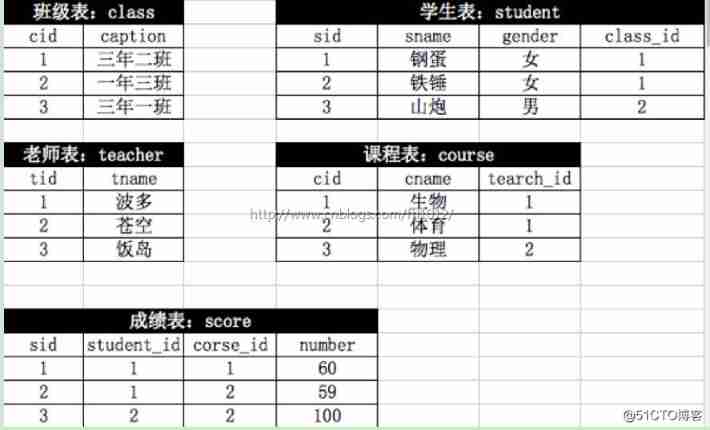
MySQL learning -- table structure of SQL test questions

随机推荐
Quick view of product trends in February 2021
H265/webvr video web page without plug-in player easyplayer Solution to the problem of cumulative delay of FLV video played by JS
See through the new financial report of Tencent music, online music needs b+c
Pagoda activities, team members can enjoy a lightweight server 1 core 2g5m 28 yuan for two years
Complete the log service CLS questionnaire in 1 minute and receive the Tencent cloud 30 yuan threshold free voucher ~
Development analysis of main chain system
Construction scheme of campus network clock system (standardized examination room)
Will the easycvr video channel of the urban intelligent video monitoring image analysis platform occupy bandwidth after stopping playing?
未来银行需要用明天的思维,来思考今天架构
Activeindex selection and redirection in the menu bar on the right of easycvs
Elastic searchable snapshot function (frozen Tier 3)
Redis source code analysis RDB
Video intelligent analysis platform easycvr derivative video management platform menu bar small screen adaptive optimization
With the solution, the nickname of the applet suddenly becomes "wechat user", and the avatar cannot be displayed?
Let ups "Impressionist users" re understand reliability
In those years, I insisted on learning the motivation of programming
Meituan financial report: making money while burning money
Easycvr, an urban intelligent video monitoring image analysis platform, plays national standard equipment videos and captures unstable packets for troubleshooting
About with admin option and with grant option
Devops in digital transformation digital risk