当前位置:网站首页>Explain C language 11 in detail (C language series)
Explain C language 11 in detail (C language series)
2022-06-26 13:03:00 【Cream dimple* ٩ ( ˊωˋ*)و*】
Catalog
2. The pointer is out of bounds
3. The space pointed to by the pointer frees up
3. The pointer points to the space to release the immediate setting NULL
4. Check the validity of the pointer before using it
Preface :
This series will share some knowledge about pointer with you , Although the pointer may be difficult to learn compared with the previous knowledge , But don't be afraid to follow Xiaobian into the world of pointers !
The pointer :
What is a pointer :
Every space in the memory will have a number , The number is the address , An address is a pointer .( Number ---- Address ---- The pointer )
The size of the pointer :
Pointer in 32 On the bit platform is 4 Bytes , stay 64 On the bit platform is 8 Bytes .
The meaning of pointer type :
Pointers are also typed , So what is the meaning of these types ?
1. The pointer type determines the permission of pointer dereference .
The code is as follows :
#define _CRT_SECURE_NO_WARNINGS 1
#include<stdio.h>
int main()
{
	int* pa;
	char* pc;
	float* pf;
	printf("%d\n", sizeof(pa));
	printf("%d\n", sizeof(pc));
	printf("%d\n", sizeof(pf));
	return 0;
}
The screenshot of the code running is as follows :

2. The pointer type determines how far the pointer can go in one step ( step ).
The code is as follows :
#define _CRT_SECURE_NO_WARNINGS 1
#include<stdio.h>
int main()
{
	int arr[10] = { 0 };
	int* p = arr;
	char* pc = arr;
	printf("%p\n", p);
	printf("%p\n", p + 1);
	printf("\n");
	printf("%p\n", pc);
	printf("%p\n", pc + 1);
	return 0;
}
The code screenshot is as follows :

Wild pointer :
Wild pointer means that the position pointed by the pointer is unknown .
The origin of wild pointer :
1. Pointer not initialized
The code is as follows :
#define _CRT_SECURE_NO_WARNINGS 1
#include<stdio.h>
// The code is not runnable
int main()
{
	int* p;
	*p = 20;// uninitialized
	return 0;
}
2. The pointer is out of bounds
The code is as follows :
#define _CRT_SECURE_NO_WARNINGS 1
#include<stdio.h>
int main()
{
	int arr[10] = { 0 };
	int* p = arr;
	int i = 0;
	for (i = 0; i <= 10; i++)
	{
		*p = i;
		p++;
	}
	return 0;
}
The screenshot of the code running is as follows :
An out of bounds occurrence is shown as follows :

3. The space pointed to by the pointer frees up
The code is as follows :
#define _CRT_SECURE_NO_WARNINGS 1
#include<stdio.h>
int* test()
{
	int a = 10;
	return &a;
}
int main()
{
	int* p = test();
	*p = 20;// When modifying the value a Space has been released
	return 0;
}
How to avoid wild pointer :
1. Pointer initialization
When you don't know why to initialize, initialize to NULL.
#define _CRT_SECURE_NO_WARNINGS 1
#include<stdio.h>
int main()
{
	int* p = NULL;
	return 0;
}
Clearly know the initialization value .
The code is as follows :
#define _CRT_SECURE_NO_WARNINGS 1
#include<stdio.h>
int main()
{
	int a = 20;
	int* p = &a;
	*p = 10;
	printf("%d\n", *p);
	return 0;
}
The code screenshot is as follows :

2. Watch out for the pointer
stay C Array out of bounds behavior is not checked in the .
3. The pointer points to the space to release the immediate setting NULL
4. Check the validity of the pointer before using it
Pointer arithmetic :
1. The pointer +- Integers
The code is as follows :
#define _CRT_SECURE_NO_WARNINGS 1
#include<stdio.h>
int main()
{
	int arr[10] = { 1,2,3,4,5,6,7,8,9,10 };
	int* p = arr;
	int* pend = arr + 9;
	while (p <= pend)
	{
		printf("%d\n", *p);
		p++;
	}
	return 0;
}
The code screenshot is as follows :

2. The pointer - The pointer
The pointer - The pointer gets the number between two elements .
The code is as follows :
#define _CRT_SECURE_NO_WARNINGS 1
#include<stdio.h>
int main()
{
	int arr[10] = { 1,2,3,4,5,6,7,8,9,10 };
	printf("%d\n", &arr[9] - &arr[0]);
	return 0;
}
The code screenshot is as follows :

The premise of pointer subtraction is that two pointers point to the same space .
The code is as follows :
#define _CRT_SECURE_NO_WARNINGS 1
#include<stdio.h>
// Implement a function to calculate the length of characters
int my_strlen(char* str)
{
	char* start = str;
	while (*str != '\0')
	{
		str++;
	}
	return str - start;
}
int main()
{
	int len = my_strlen("abc");
	printf("%d\n", len);
	return 0;
}
The screenshot of the code running is as follows :

3. The relational operation of pointers
The standard stipulates : Allows a pointer to an array element to be compared with a pointer to the memory location after the last element of the array , However, it is not allowed to compare with a pointer to the memory location before the first element .

Pointers and arrays :
The array name is the address of the first element of the array .
The code is as follows :
#define _CRT_SECURE_NO_WARNINGS 1
#include<stdio.h>
int main()
{
	int arr[10] = { 0 };
	printf("%p\n", arr);// Array name
	printf("%p\n", &arr[0]);// The first address of the array
	return 0;
}
The code is shown in the following screenshot :

The secondary pointer :
See code for explanation , The code is as follows :
#define _CRT_SECURE_NO_WARNINGS 1
#include<stdio.h>
int main()
{
	int a = 10;
	int* pa = &a;// Here pa Is the first level pointer
	int** ppa = &pa;// Here ppa It's a secondary pointer
	int*** pppa = &ppa;// Here pppa It's a three-level pointer
	return 0;
}

Pointer array :
Arrays also have pointers , Let's briefly introduce the format of pointer array .
The code is as follows :
#define _CRT_SECURE_NO_WARNINGS 1
#include<stdio.h>
int main()
{
	int arr[10];
	char ch[5];
	int* paar[5];// Shaping array pointers
	char* pch[5];// Character array pointer
	return 0;
}
Conclusion :
That's all for you to share ! If you want to see it C Language other series , Click on the link below ! I hope that's helpful , Students who want to learn remember to pay attention to Xiaobian and study together ! If there are any mistakes in the article, you are also welcome to point out the maze for Xiaobian in time ( I'd like to thank you guys first !)
边栏推荐
猜你喜欢

processing 随机生成线动画

processing 函数translate(mouseX, mouseY)学习

倍福PLC基于CX5130实现数据的断电保持

System tasks (display / print class) in Verilog - $display, $write, $strobe, $monitor

倍福EtherCAT Xml描述文件更新和下载
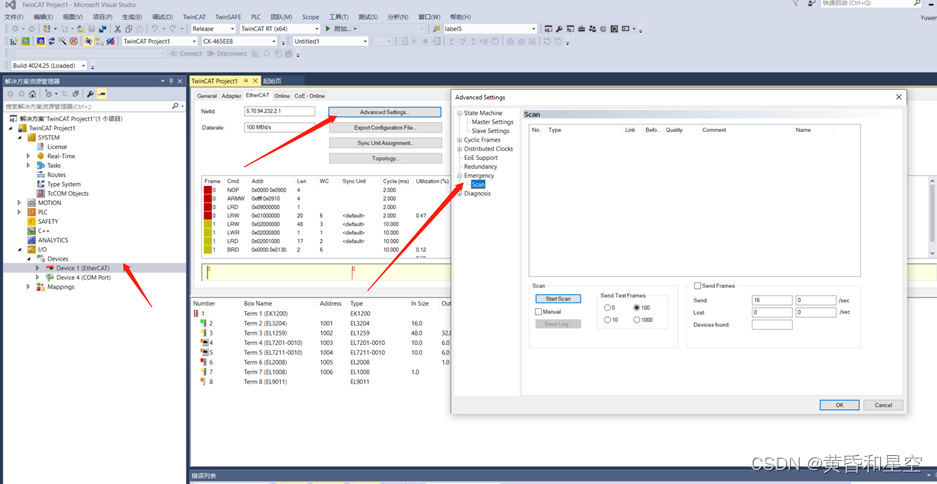
倍福TwinCAT通过Emergency Scan快速检测物理连接和EtherCAT网络

倍福TwinCAT3实现CSV、TXT文件读写操作

不到40行代码手撸一个BlocProvider

goto语句实现关机小程序

Tiger DAO VC产品正式上线,Seektiger生态的有力补充
随机推荐
倍福NC轴状态转移图解析
. Net Maui performance improvement
National standard gb28181 protocol easygbs video platform TCP active mode streaming exception repair
Learning Processing Zoog
sql 将数据表b字段值赋值到数据表a中某一列
倍福PLC基于NT_Shutdown实现控制器自动关机重启
机器学习笔记 - 时间序列的季节性
数字信号处理——线性相位型(Ⅰ、Ⅲ型)FIR滤波器设计(1)
第01章_Linux下MySQL的安装与使用
倍福PLC旋切基本原理和应用例程
find及du -sh显示权限不够的解决方法
别乱用 FULL_CASE 和 PARALLEL_CASE
goto语句实现关机小程序
PostGIS geographic function
Solution of Splunk iowait alarm
zoopeeper设置acl权限控制(只允许特定ip访问,加强安全)
First knowledge - Software Testing
Deep parsing MySQL binlog
【网络是怎么连接的】第二章(上): 建立连接,传输数据,断开连接
倍福PLC实现绝对值编码器原点断电保持---bias的使用